Biological Sciences
Why Study Biology?
Biology is the scientific study of life, living organisms, interactions among living organisms, and interactions among living organisms and their environment. Biology is a broad field with many applications and potential job opportunities, including such diverse areas as medicine, wildlife management, biotechnology, genetics, behavior, conservation, paleontology, and population dynamics. Students in this program are provided flexibility to focus on certain areas of biology, namely microbiology, biomedical sciences, environmental biology, or biology teaching.
What Will I Learn?
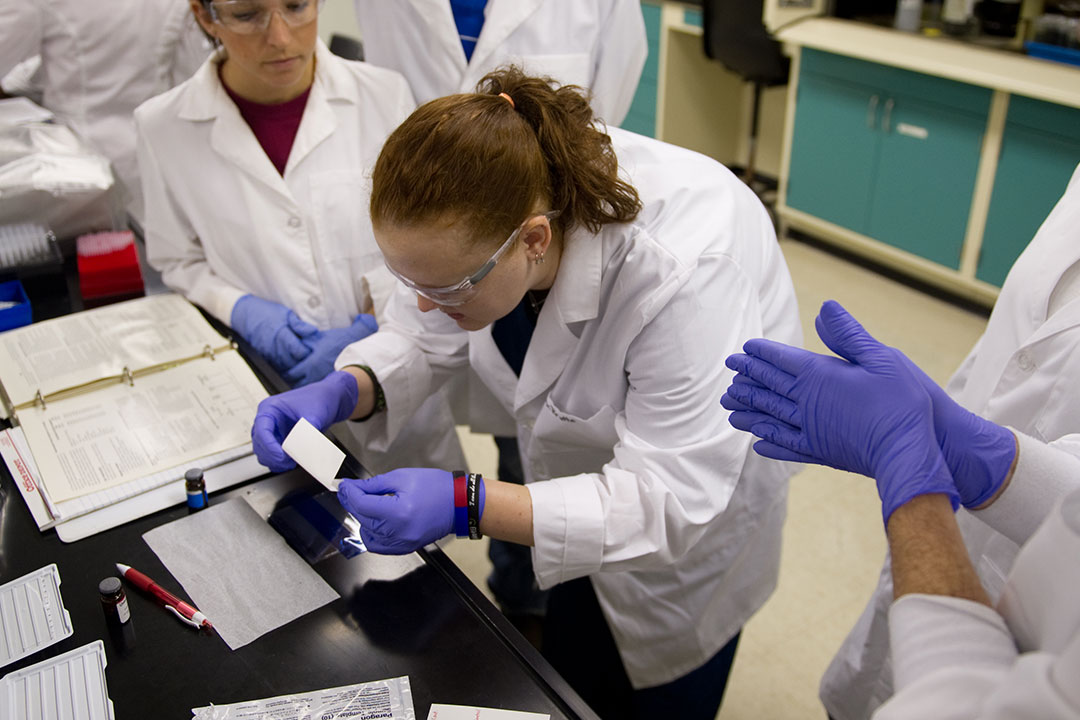
The Biology curriculum builds a foundation in organismal biology, genetics and cellular biology, physiology, and ecology as well as chemistry, physics, and statistics. Students then have flexibility in choosing specific courses that are tailored to fit specific career goals. Laboratories, field studies, and internships train students with practical skills, writing and speaking ability, and critical thinking to be more competitive in the job market and to prepare them for professional school or post-graduate studies.
The College offers the Stephen Hatten Pre-Medical Externship for pre-medical students and a comparable Pre-Dental Externship for pre-dental students. Advisors can also help students find other internship opportunities.
Opportunities for research are available in almost every area of biology for both Honors and non-Honors undergraduates. In addition to faculty-funded research, the Mississippi IDeA Network of Biomedical Research Excellence (INBRE) and USM's Drapeau Center for Undergraduate Research fund a number of research projects and summer activities.
The School has dozens of scholarships for students in biology, some specifically tailored for different emphases (e.g., pre-medical, pre-dental, microbiology), hometowns, or year of study.
Tropical Ecology in Belize - 2 weeks, January Intersession
This program will consist of two weeks in the field during the January intersession in Belize, where you will study tropical flora and fauna in several different ecosystems: coral reefs, pine savannahs, rainforests, and mangrove swamps. You will interact with groups working on the conservation of plants and animals in Central America and with locals who practice subsistence farming. Students will earn 3 hours of BSC 404LCA or BSC 504LCA.
British Studies Program - 4 weeks, Summer
Students who participate in this Biogeography course will earn 6 hours of GHY 499ca or GHY 599ca while truly getting to know the city of London. They will leave this study abroad experience, no longer a tourist, but as an experienced traveler who understands and appreciates the rich human history and environmental evolution that created this wonderfully complex city. At its most simplistic though, London is just a river town, and the class material will begin at the end of the last ice age, when the River Thames broke through the Chiltern Hills and started flowing down its current path. We will then look at centuries of changing biogeography and human settlement patterns starting with the Romans and continuing through the development happening presently. Along the way, we will encounter wars, diseases, fires, as well as stories of natural and human resilience that make London the global city it is today. Students will achieve this understanding through historic map analysis, and a series of walking tours and field excursions. Then, for the last week of the course, we will travel to Edinburgh, Scotland. Students will compare and contrast the landscape of northern Great Britain to that of southern England, and see first-hand the vastly different human-environmental histories that shaped the cities of Edinburgh and London.
International Internship Program - 7 weeks, Summer
Gain professional experience and earn six credits of BSC 492ca by interning in Dublin! Travel with a group of USM students to Ireland this summer. You’ll learn about Dublin and the Irish work culture during the first week. Then, for the next six weeks, you’ll spend 32 hours per week working in a field corresponding to your field of interest.
Student Testimonial, Internship 2023
"Interning abroad is easily one of the best decisions I have ever made. As a biological sciences major, I was offered to intern at the Irish Heart Foundation, where I cultivated lifelong relationships with dedicated healthcare coordinators. Not only did I make personal connections with the people I worked with, but I was able to experience a side of healthcare that I hadn't been exposed to before. I realized how much work really goes into patient care after hospital discharge, and I have a new appreciation for organizations like theirs. I believe having a deeper understanding of the various formats of patient care will help me to better treat my future patients, working as a Physician Assistant. If I were given the chance to do it all again, I wouldn't hesitate in saying yes!" - Madison Trahan
To learn more about any study abroad program, visit StudyAbroad.USM.edu.
Biology Faculty
Our biology faculty teach and do research using a wide variety of organisms, scales, and techniques. Our faculty work on viruses and bacteria, fungi, plants, and animals, work at the molecular and biochemical level to the ecosystem level, and use techniques ranging from molecular biology and bioinformatics to field studies and laboratory manipulations. Major research facilities in the biomedical sciences and in organismal biology and ecology are available.
For questions regarding General Biology, Ecology & Organismal Biology, contact Dr. Mac Alford at Mac.AlfordFREEMississippi or visit JST 308.
For questions regarding Biomedical Sciences or Microbiology, contact Dr. Hao Xu at Hao.XuFREEMississippi.
Professional Licensure Disclosure
The Biological Science, (Licensure) B.S. program at the University of Southern Mississippi is designed to meet the licensure standards set by the Mississippi Department of Education.
Students seeking licensure in another state are advised to contact the appropriate licensing board in that state to determine specific requirements of guidelines for reciprocity. For information about professional licensure determinations made to comply with federal regulations requiring disclosures as to whether a program that is marketed or designed to lead to licensure or state certification leads to professional licensure or state certification, see the following:
General professional licensure/state certification information
https://www.usm.edu/professional-licensure-certification-disclosures/index.php
For questions regarding professional licensure, contact the program coordinator for your specific program. Program coordinators are grouped by college. To access the list click the 'Professional Licensure and Certification Boards by USM College' button at the top of the main Professional Licensure and Certification web page (https://www.usm.edu/professional-licensure-certification-disclosures/index.php).
For questions regarding the Licensure program, please contact Allison Downing at Allison.DowningFREEMississippi
Availability
| Degree Plan | Availability |
|---|---|
| Biological Sciences (Biomedical Sciences) BS | Hattiesburg |
| Biological Sciences (Conservation Biology) BS | Hattiesburg |
| Biological Sciences BS | Gulf Park, Hattiesburg |
| Biological Sciences Minor | |
| Coastal Plain Plant Identification Undergraduate Badge |
- Medicine, Dentistry, and Biomedical Research
- High School and College Teaching
- Conservation and Ecology
- Biotechnology and Laboratory Management
- Food or Environmental Biology
- Wetland Delineation and Restoration
- Dr. Kacy Redd, 2001
Assistant Vice President of STEM Education Policy, Association of Public & Land Grant Universities - Dr. Joshua R. Ennen, 2009
Aquatic Conservation Biologist, Tennessee Aquarium
- Dr. Aimée K. Thomas, 2010
Assistant Professor of Biology and Assistant Director of the Office of Teacher Certification, Loyola University - Matthew Reudelhuber, 2006
Environmental Protection Specialist, U.S. Coast Guard
- Dr. Amanda Perkins, 2005
Veterinarian, Cat Hospital of Metairie - Dr. Emily L. Burke, 2000
Otolaryngologist, Greater New Orleans Ear Nose Throat Doctors