Gulf Angler Charles Sheldon Honored for Outstanding Contributions to Cobia Research
Thu, 08/27/2026 - 10:01am | By: Megan Le
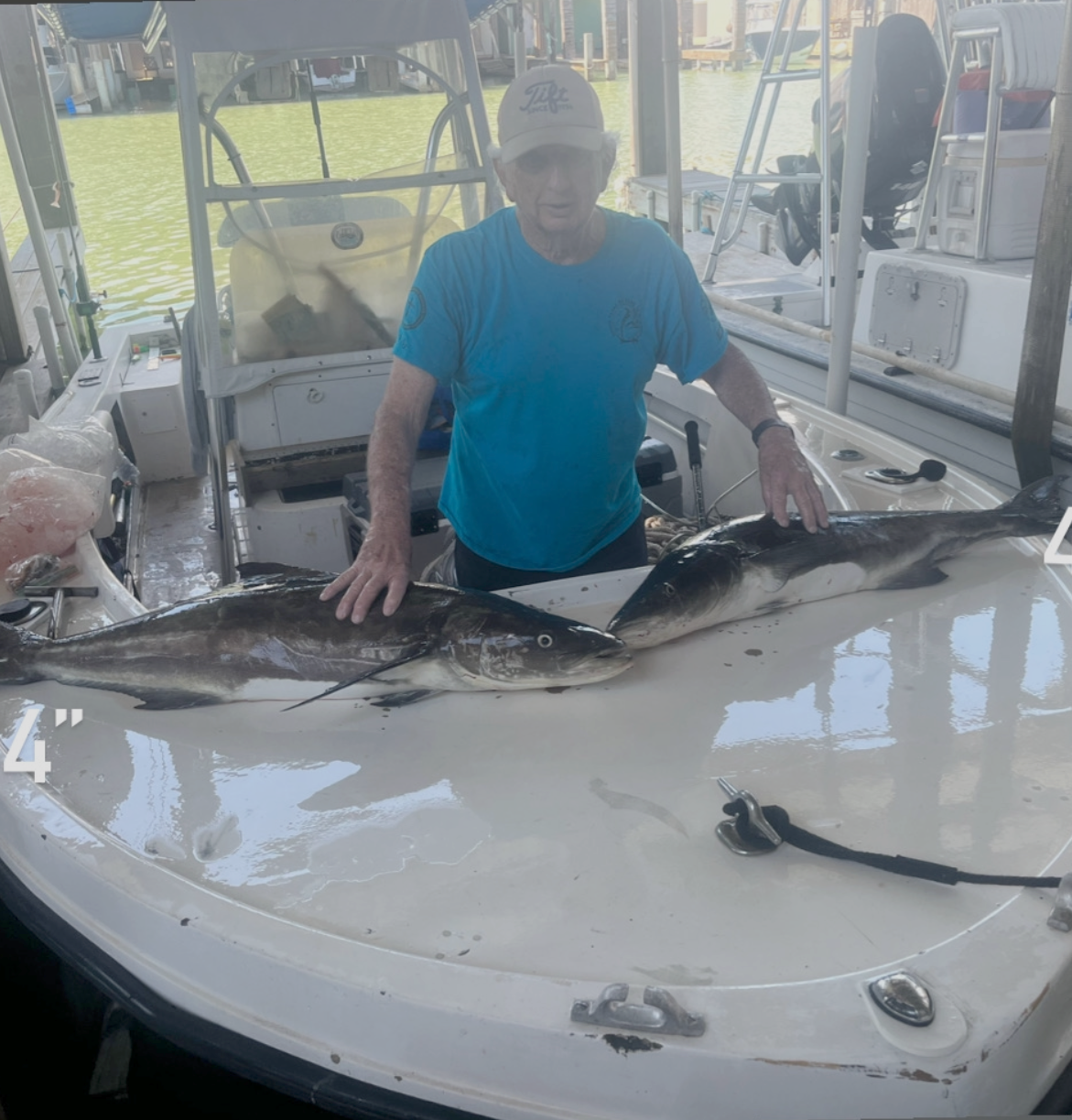
Charles Sheldon
The University of Southern Mississippi's Center for Fisheries Research and Development (CFRD) is proud to recognize volunteer angler Charles Sheldon of South Padre Island,
Texas, for his outstanding contributions to the Cooperative Sport Fish Tag and Release
Program.
Sheldon, an avid fisherman, has tagged and released 493 cobia in the Gulf of America
(Gulf), 390 of which were tagged from 2008-22 as part of the CFRD-managed Cooperative
Sport Fish Tag and Release Program. Over the years, 15 of the cobia Sheldon tagged
were reported as recaptured after being at large for anywhere from zero to 1,056 days
and traveling distances of up to 465 miles. His efforts have helped CFRD researchers
better understand cobia growth, movements, population structure and regional connectivity.
“I started tagging billfish and yellowtail during the early '80s in the Gulf of Mexico.
Tagging became a passion of mine to preserve fish for the next generation,” said Sheldon.
“Then, in 2008, when the USM cobia tagging program started, I really enjoyed eating
cobia, so I figured I might as well help preserve the species. I am glad to volunteer
with scientists and their research.”
The Cooperative Sport Fish Tag and Release Program was established in 1988 by the
late Jim Franks, a CFRD senior research scientist, as an effort specifically to study
cobia movements. The program recruited recreational fishermen across the Gulf to aid
in tagging cobia and encourage the reporting of recaptured tagged fish. The program,
funded by the Mississippi Department of Marine Resources through the U.S. Fish and
Wildlife Service Sport Fish Restoration Program, was widely accepted and since that
time has expanded to include tripletail in 1996 and red drum and spotted seatrout
in 2019.
Over the last four decades, volunteer anglers have tagged and released more than 20,000
cobia, and nearly 1,400 of these were later reported as recaptured. This long-term
dataset is one of the oldest known repositories of tag-and-release information for
cobia and has significantly expanded scientific understanding of the species. CFRD
researchers have documented not only seasonal migrations but also long-distance latitudinal
movements throughout the Gulf, suggesting there are resident cobia populations in
both the northern Gulf and off South Florida.
The data collected through the program played a key role in the 2013 Southeast Data,
Assessment and Review (SEDAR 28) stock assessment, helping redefine the Gulf cobia
population as extending into the eastern Atlantic up to the Florida-Georgia border.
Today, the dataset continues to contribute to state-of-the-art species distribution
and habitat suitability models through the Gulf Ecosystem Initiative, a partnership
between the National Center for Ecological Analysis and Synthesis (NCEAS) and the
NOAA RESTORE Science Program.
Beyond its scientific contributions, the Cooperative Sport Fish Tag and Release Program
has empowered generations of recreational anglers to become citizen scientists. By
participating in the tag-and-release effort, volunteers aid in the collection of valuable
long-term data that helps inform fisheries management decisions while promoting stewardship
and conservation of Gulf marine resources.
“Our fishing community is one of the best partners we have in fisheries science. Thanks
to the dedication of anglers like Mr. Sheldon, we have been able to discover Gulf-wide
movement and seasonality patterns for cobia and other species. The Tag and Release
Program was built on the passion of anglers committed to sustainable fisheries, and
it is incredible to see this passion still thriving today,” said CFRD Director Jill
Hendon.
By recognizing Sheldon, CFRD also celebrates the enduring success of a program built
on the vision of the late Jim Franks. Together, Franks' leadership and the dedication
of volunteer anglers like Sheldon have created one of the Gulf's longest-running fisheries
tagging programs—an enduring partnership between scientists and the public that continues
to improve understanding and conservation of Gulf fisheries.
Learn more about the Cooperative Sport Fish Tag and Release Program, request a free citizen scientist tag kit, and/or report the recapture of a tagged fish.