RD Master Class
Igniting Proposal Potential:
A Research Development Master Class Case Study
Building sustainable research capacity requires more than strong ideas — it requires
intentional investment in people. This case study highlights how integrated research
development and research administration training can serve as a powerful lever for
human capital development, expanding proposal leadership beyond traditional faculty
roles and strengthening institutional research capacity.
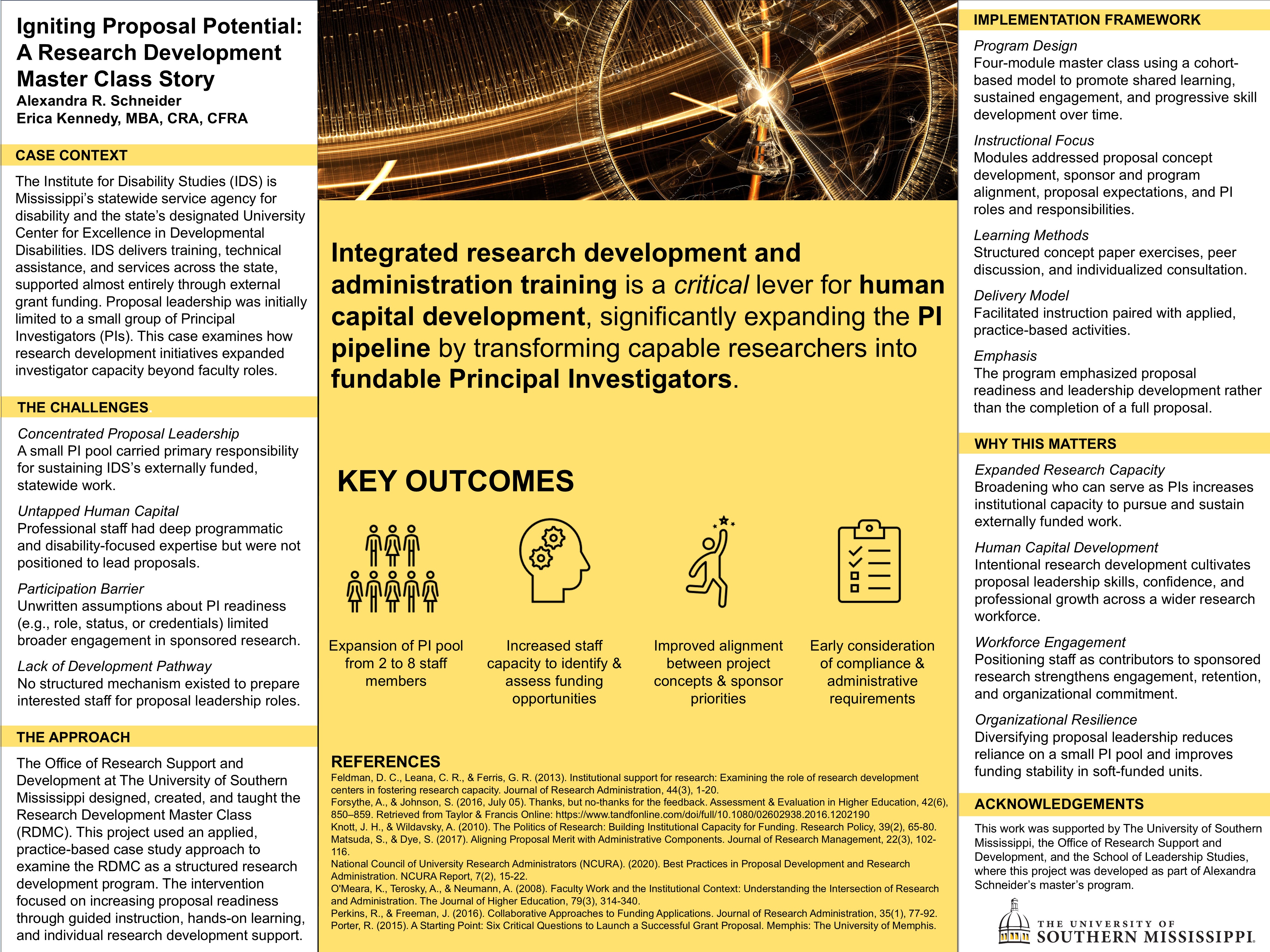
Developed by the Office of Research Support and Development at The University of Southern Mississippi (USM), the Research Development Master Class (RDMC) was designed as a structured, practice-based intervention to increase proposal readiness and cultivate a broader pipeline of fundable Principal Investigators (PIs). The program responds to a common institutional challenge: highly capable professionals with deep subject-matter expertise often lack access to clear development pathways that prepare them to lead sponsored research. Using a cohort-based, four-module master class model, the RDMC integrates proposal concept development, sponsor alignment, administrative expectations, and PI roles and responsibilities. Rather than focusing on the completion of a single proposal, the program emphasizes proposal readiness, leadership development, and long-term research capacity building. Participants engage in structured concept paper exercises, peer discussion, and individualized consultation, creating a shared learning environment that supports skill development over time.
This initiative was piloted within the Institute for Disability Studies (IDS), Mississippi’s designated University Center for Excellence in Developmental Disabilities. As a statewide service agency supported almost entirely through external grant funding, IDS faced concentrated proposal leadership and untapped human capital. Professional staff possessed extensive programmatic and disability-focused expertise but lacked a formal pathway to proposal leadership. The RDMC case study examines how intentional research development practices addressed these gaps and repositioned staff as contributors—and leaders—within the sponsored research landscape.
Why This Case Study Matters
The findings from this case demonstrate that integrated research development and administration training can meaningfully expand institutional research capacity by:
- Broadening who can serve as PIs
- Strengthening proposal alignment with sponsor priorities
- Increasing early awareness of compliance and administrative requirements
- Reducing reliance on a small pool of proposal leaders
As a result of the RDMC pilot, the PI pool expanded from two to eight staff members, with participants demonstrating increased confidence, readiness, and strategic engagement in funding opportunities. These outcomes underscore the role of research development as both a capacity-building and workforce development strategy.
Explore the Poster Presentation
The accompanying poster presentation provides a visual overview of the case study, including the program framework, implementation approach, and key outcomes. It offers a concise look at how intentional research development efforts can transform individual capacity into institutional resilience. View the poster presentation below to explore the framework, outcomes, and lessons learned from this applied research development initiative.