Honors College
Colloquium 26-27
Page Content
Required for all first-year Honors College students, this two-semester sequence lays the foundation for your development as an Honors Scholar. Focused on a common theme, this class will encourage you to think creatively, be curious and investigative, and ask rich and complex questions.
In the belief that action and experience are a critical part of the learning process, Honors Colloquium embraces the principles of “active learning.” In that spirit, all classes take a required active-learning trip during Fall Break; travel costs, accommodations, tickets, and some meals will be paid for by the Honors College.
HON 111 (Fall)
In HON 111, you will learn how to encounter and interact with different kinds of writing and texts; how to become a better analytical reader; how to collaborate with your fellow scholars; how to engage in academic debate and discourse; and how to improve your communication skills, both written and oral.
HON 112 (Spring)
In HON 112, we will go from a focus on asking questions to a focus on answering them. While you continue to hone the skill of asking rich and rewarding questions, you will also begin developing the tools you need to find answers. In short, in HON 112 you will learn how to undertake “research,” broadly defined, what research looks like in various disciplines, the ethics of research, and how research develops organically.
Once we begin to recognize the ubiquitousness of patterns as we go about our daily lives, there is a certain pleasure in our ability to recognize, study, recreate, and even disrupt these patterns.
Our DNA is made up of complex patterns of nucleotides, which generate the patterns of proteins that make everything about us. Languages all over the world are actually patterns involving both phonetic sounds and predictable, grammatical rules. Historians often talk about history as being cyclical and patterned, often destined to repeat. Natural ecosystems are made up of cycles that repeat themselves over and over again. Financial markets rely on trend following and patterns to help us understand stability, risk, and economic health. And in today’s modern world, we need look no further than artificial intelligence to evaluate the ways machine learning is built on the very notion of what it means to recognize and emulate patterns.
Across its various sections, Honors Colloquium 2026-2027 will examine the concept of “patterns” through interdisciplinary lenses meant to help us identify and explore the various ways patterns make up our experiences and shape how we learn, study, create, change, and interpret this world. Although each section of Colloquium will approach this topic differently and will make use of different texts, all sections will begin the year by reading, discussing, and writing about Samantha Harvey’s Orbital: A Novel.
H001 MW 9:30 - 10:45
Framing Life’s Thresholds: Patterns in Life and Death
Professor Jennifer Peterson
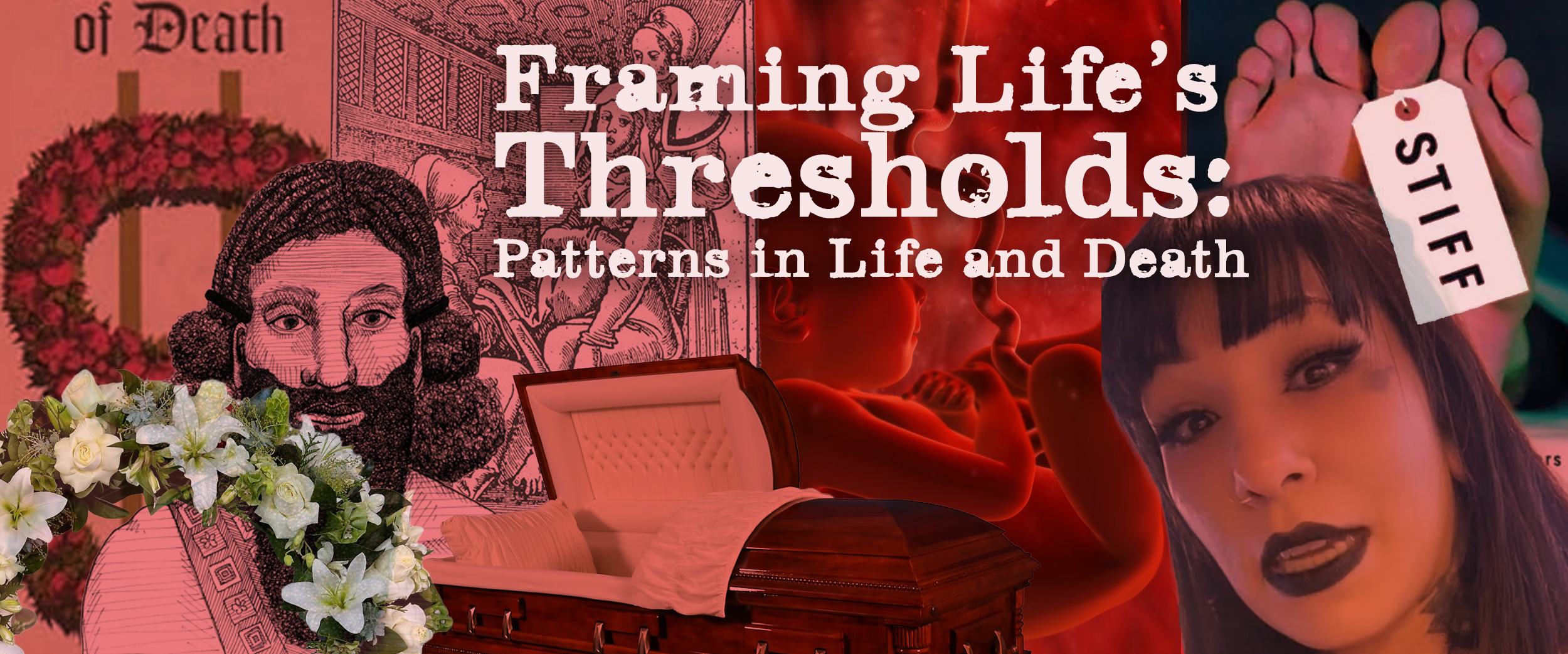
This colloquium section will engage in a year-long study of the beginning and end of life. Birth and death are universal experiences that constitute the most basic pattern of human existence, and most people in history viewed them as mundane, even intimate events, as they witnessed home births or stood vigil over deceased loved ones. Yet for many people today these transitional moments have been sanitized, disappeared into medical spaces, and rendered far from familiar. From the earliest written texts, humans have been attempting to capture birth and death in writing: Gilgamesh confronts his own mortality in the decaying face of his deceased friend, Enkidu; medieval midwives inscribed birthing girdles with prayers for safety; William Wordsworth’s poems reach toward the mysterious realm of pre-existence; movies and television show us stylized, hazy scenes of labor; and millions of internet users seek assurance about the experience of dying on “Deathtok.” Through scholarly and literary readings, guest speakers, and field research experiences, we will learn about the various discourses -- medical, legal, spiritual, and cultural -- that surround these transitional moments. We will pay special attention to the history and present-day experience of maternal-fetal medicine, where health outcomes often mirror existing patterns of racial and class disadvantage.
Throughout this colloquium, students will experiment with different modes of writing, culminating in a substantial and deeply-contextualized essay that engages with some aspect of birth or death. Practicing the skill of the braided narrative—which spans journalistic, academic, and literary genres—students will interweave modes such as theory, research/data, personal narrative, and interview. Writing a substantive, braided essay will give students an enhanced ability to create thick description—an essential tool for future researchers as they convey context and meaning of the issues they write about. Additionally, writing in this mode will enhance students’ narrative competence, which has been identified as a key skill for both interpersonal relationships and success in fields like education and health professions, making them better able to listen, construct meaning from, and empathize with the experiences of others.
Potential Readings: Monica Casper, The Making of the Unborn Patient; Olivia Clare Friedman, Here Lies; Paul Kalanithi, When Breath Becomes Air; Jessica Mitford, The American Way of Death; Toni Morrison, Beloved; Mary Roach, Stiff; Richard W. Wertz and Dorothy C. Wertz, Lying-In: A History of Childbirth in America
H002 MW 9:30 - 10:45
Exploring Patterns and Worldviews through Storytelling
Professor Mary Sheffer

As humans, we use stories to share experiences, ideas, histories, and emotions. Stories come in many varieties and styles—and, yes, patterns—all of which help us better understand and connect with each other. Fairy tales, novels, and movies tend to follow specific genre criteria that position their stories and our takeaway from those stories in very different ways.
In the fall semester, we will engage in critical discussions on how fairytales and animation bridge cultural and age barriers and explore key works from iconic animation studios like Disney and Universal. In the spring semester, we will continue to analyze how we explore our world through graphic memoirs and novels. By the end of the two semesters, we will have explored and investigated storytelling and its effects through creative projects and research investigations.
Potential Readings: Virginia Evans, The Correspondent; C.S. Lewis, The Lion the Witch and the Wardrobe; Stephanie Kate Strohm, Straight on Till Morning: A Twisted Tale Graphic Novel; Serena Valentino, Fairest of All: A Villains Graphic Novel; Jack Zipes, Fairy Tales and the Art of Subversion; Jack Zipes, Once Upon a Time There Was Truth: or, Why We Need Fairy Tales
H003 TTH 11:00 - 12:15
Rules of the Game: On Playing, Breaking, and Rebuilding the World
Professor Craig Carey
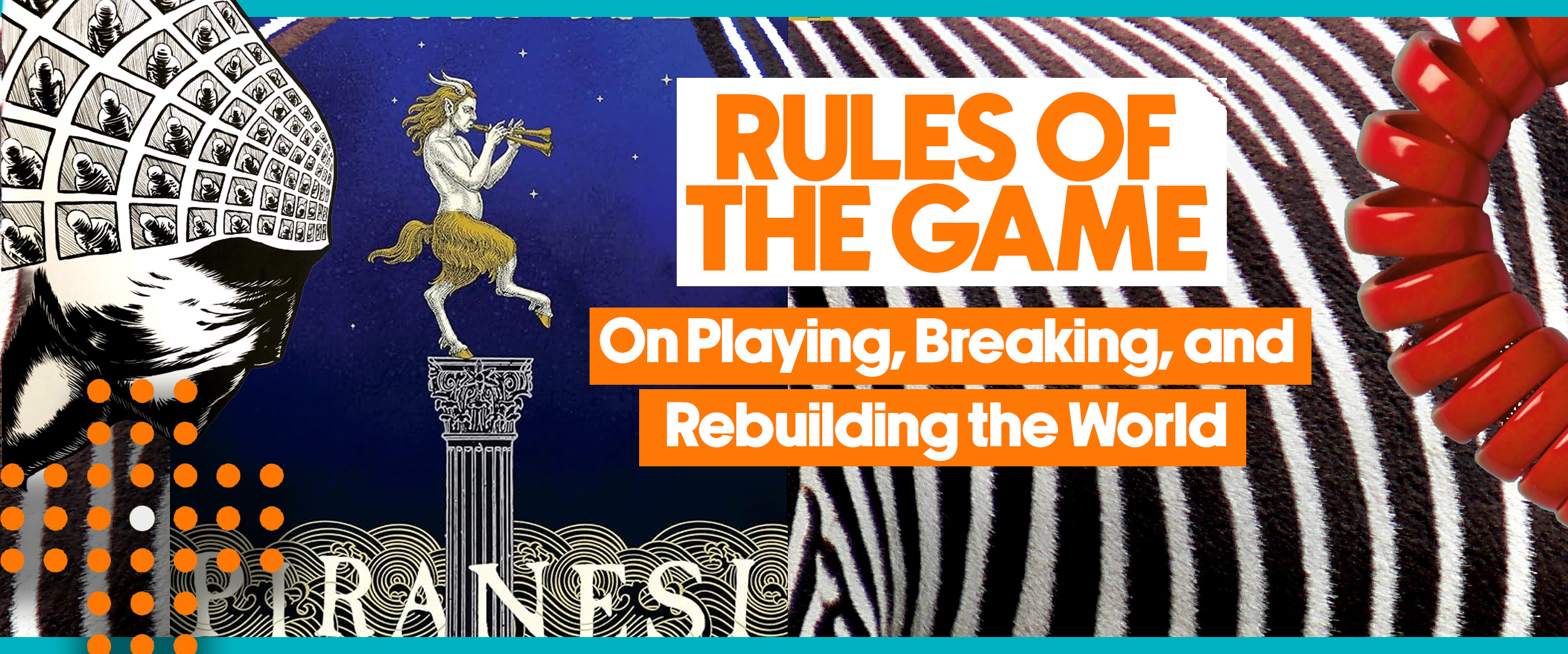
This section of colloquium invites students to play and experiment—to learn how to see, read, write, feel, bend, break, and reverse engineer the deeper rules and patterns that structure “the game of life.” Moving across history, nature, technology, economics, literature, and politics, we will examine how different rules, structures, and materials paradoxically constrain and create the conditions for playing, breaking, and rebuilding the world around us. “It is a happy talent to know how to play,” Ralph Waldo Emerson writes, and our goal will be to learn how to play wisely, ethically, aesthetically, dialectically, collaboratively, and with an eye toward knowing and hacking the rules that shape our historical existence. So, from Karl Marx to AI, through fragile ecosystems and technical infrastructures, across novels, films, games, and other media, we will play and replay the world until we learn how to convert its glories and horrors into valuable lessons for personal, practical, and professional living.
By the end of our year together, students will have developed a deep understanding of systems, structures, and rules across different intellectual playgrounds, which they can then use to break through obstacles, make sense of an increasingly complex world, and level up their knowledge, critical thinking, and research skills. In the fall, we’ll focus on the rules of nature, perception, games, and the visual world; in the spring, we’ll turn to social, economic, bureaucratic, and artificial structures. The course will include guided discussions, exploratory projects, creative teamwork, and research investigations geared toward students’ interests.
Potential Readings/Films/Games: Philip Ball, Patterns in Nature: Why the Natural World Looks the Way It Does; Susanna Clarke, Piranesi; Maggie Gram, The Invention of Design: A Twentieth-Century History; Frank Lanz, The Beauty of Games; Karl Marx, “The Fetishism of Commodities and the Secret thereof”; C. Thi Nguyen, The Score: How to Stop Playing Somebody Else’s Game; Richard Powers, Playground; Nick Sousanis, Unflattening; Nick Srnicek, Silicon Empires: The Fight for the Future of AI; Yanis Varoufakis, Talking to My Daughter About the Economy: or, How Capitalism Works—and How It Fails; The Rules of the Game (dir. Jean Renoir); Citizen Kane (dir. Orson Welles); PlayTime (dir. Jacques Tati); The Life Aquatic with Steve Zissou (dir. Wes Anderson); Norco (Geography of Robots); Her Story (Sam Barlow).
H004 TTH 11:00 - 12:15
Patterns of Expression: Communication, Art, and Human Meaning-Making
Professor Colbey Penton
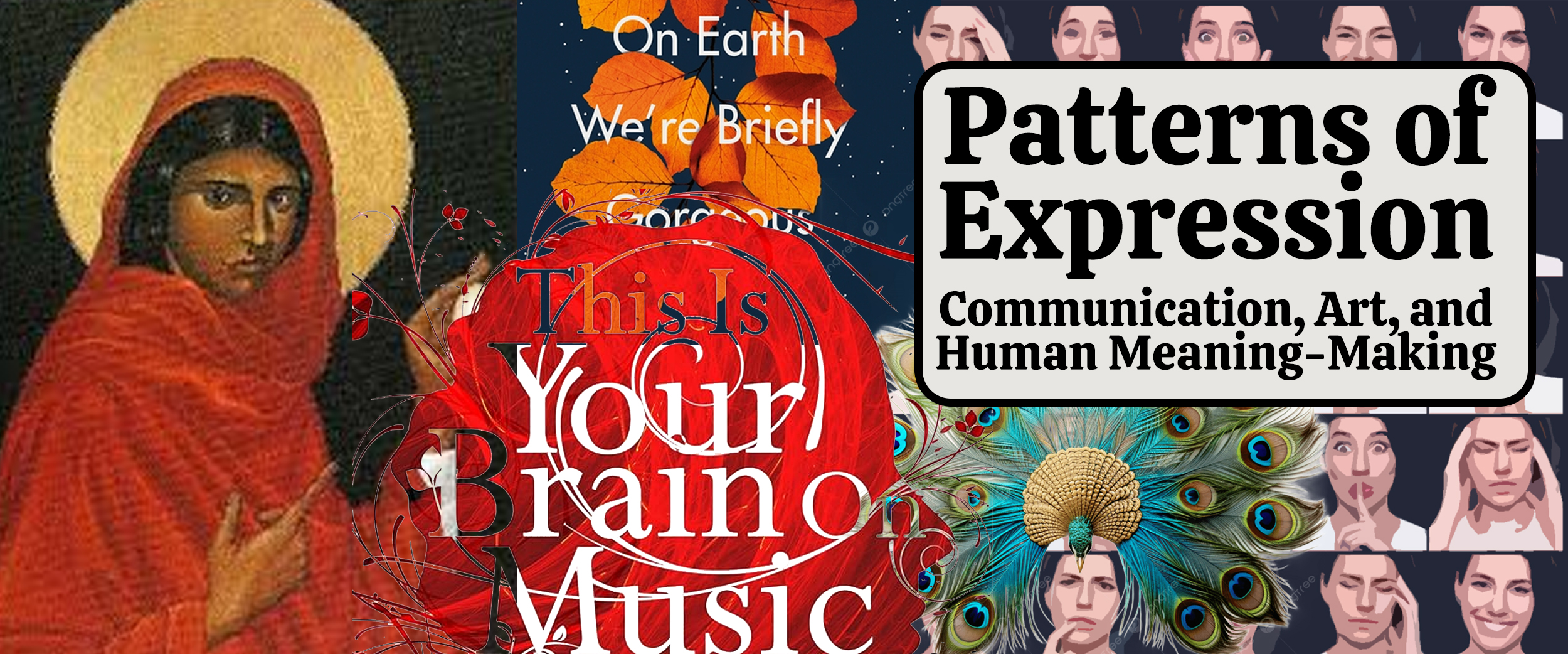
This section of colloquium examines patterns in how humans create meaning and communicate. Together, we will explore the cultural, historical, and institutional factors shaping our communicative expressions and whether they are short-lived or endure. Drawing from behavioral science, social psychology, neuroscience, art history, literary studies, and religious history, we will ask some of the following questions: What do we express? How do we express it? What happens when expression is suppressed?
In the fall, we will examine the science and psychology of communication and behavioral research on first impressions, trust, and presence. We will also study nonverbal communication: microexpressions, posture, silence, and gestures that often convey more than words. The art of conversation will center this semester, as we explore how genuine connection is made, sustained, and sometimes lost. Students will analyze and practice communication patterns and expand their expressive range through observation and exchange.
In the spring semester, we will focus on understanding how artists use patterns in visual art, poetry, music, and dance to express emotions. Our goals are to analyze how these patterns help convey emotions across traditions, to investigate how bodily patterns and nervous system rhythms influence our engagement with art and one another, and to critically examine the forces that have suppressed certain voices or artistic expressions throughout history.
Through guided discussions, reflective writing, creative projects, and research, we will develop skills in close reading, critical analysis, multimodal expression, and research. Ultimately, students will gain a richer vocabulary for their emotional lives, a sharper eye for patterns in their experiences, and a deeper understanding of why expanding human expression is quietly radical.
Lisa Feldman Barrett, How Emotions Are Made (selections); John Berger, Ways of Seeing; Marc Brackett, Permission to Feel; Olivia Fox Cabane, The Charisma Myth; Deb Dana, Anchored: How to Befriend Your Nervous System; Adam Grant, Think Again; Daniel Kahneman,Thinking, Fast and Slow (selections); Karen L. King, The Gospel of Mary of Magdala; Daniel J. Levitin, This Is Your Brain on Music; Kate Murphy, You’re Not Listening; Mary Oliver, A Poetry Handbook; Elaine Pagels, The Gnostic Gospels; Marshall Rosenberg, Nonviolent Communication; Rick Rubin, The Creative Act: A Way of Being; Vanessa Van Edwards, Captivate; Ocean Vuong, On Earth We’re Briefly Gorgeous; David Bayles and Ted Orland, Art and Fear; Bessel van der Kolk, The Body Keeps the Score (selections)
H005 TTH 11:00 - 12:15
Leading by Design
Professor Candice Salyers
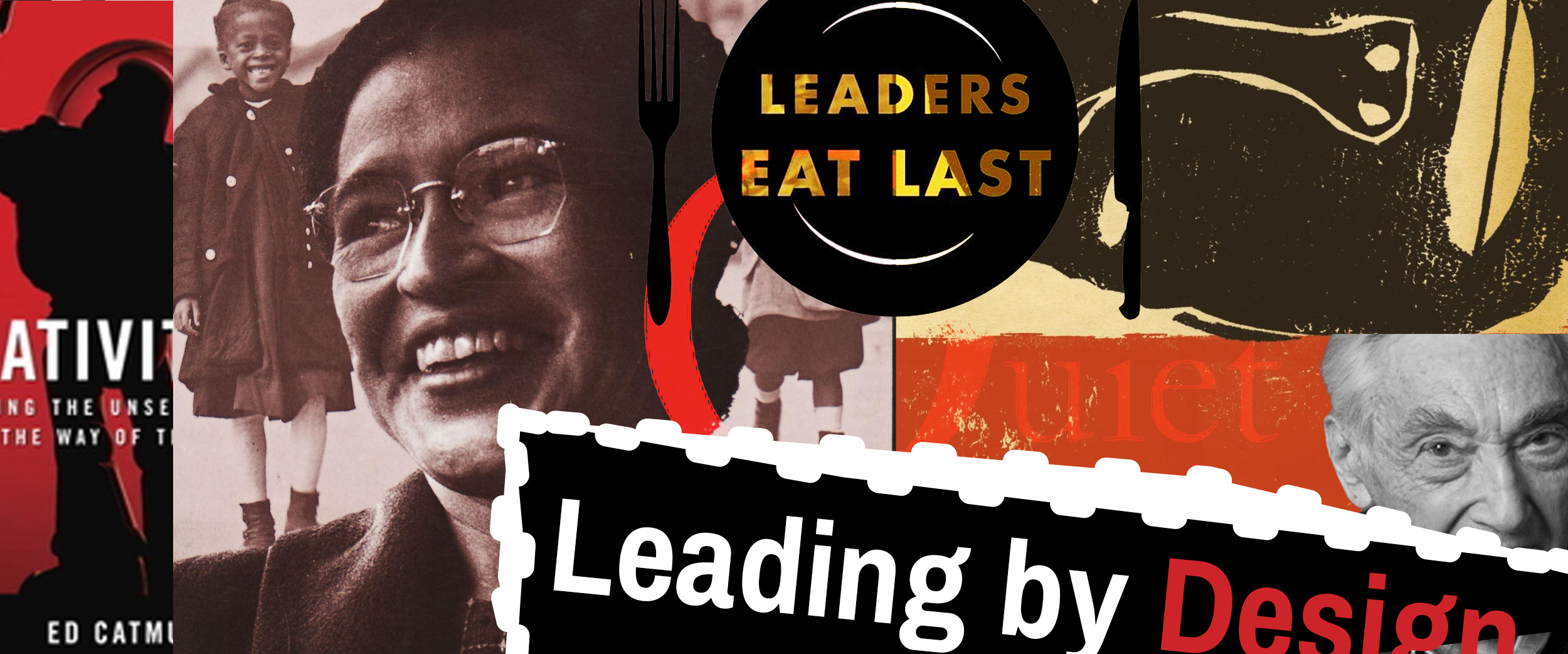
In this section of Colloquium, we will explore how leadership creates, reinforces, and disrupts patterns—systems of behavior, cycles of power, and grammars of possibility—on individual, communal, national, and international levels. Approaching leadership as action and affect, rather than as a position or title, we will consider how those entrusted with leadership responsibilities balance accountability and service, meet the needs of diverse populations, navigate challenges in decision making, and pursue justice and transformation. By analyzing divergent ways of using or sharing power, developing relationships, and establishing structures of support or repression, we will identify leadership patterns to learn from, participate in, or challenge.
Our efforts this year will include investigating the work of individuals breaking traditional patterns to engage in creative leadership that addresses urgent issues facing humanity in novel ways. We will read texts by authors from around the world, consider the contexts in which they were compelled to lead, harvest insights their work can offer us as scholars and citizens, and experiment with leadership practices in our own lives.
Potential Readings: Chinua Achebe, Things Fall Apart; Jacinda Arden, A Different Kind of Power; Rutger Bregman, Moral Ambition: Stop Wasting Your Talent and Start Making a Difference; Brene Brown, Strong Ground: The Lessons of Daring Leadership, the Tenacity of Paradox, and the Wisdom of the Human Spirit; Susan Cain, Quiet: The Power of Introverts in a World that Can’t Stop Talking; L. David Marquet, Turn the Ship Around: A True Story of Turning Followers into Leaders; Roger Martin, The Opposable Mind; Greg McKeown and Liz Wiseman, Multipliers: How the Best Leaders Make Everyone Smarter; Rosa Parks, Quiet Strength; Simon Sinek, Leaders Eat Last; Amy Wallace and Ed Catmull, Creativity, Inc.: Overcoming the Unseen Forces that Stand in the Way of True Inspiration; David Zirin, The People’s Historian: The Outsized Life of Howard Zinn
H006 MW 2:30 - 3:45
Patterns of Civilization: The Rhythms of Humanity
Professor Jacob Cotton
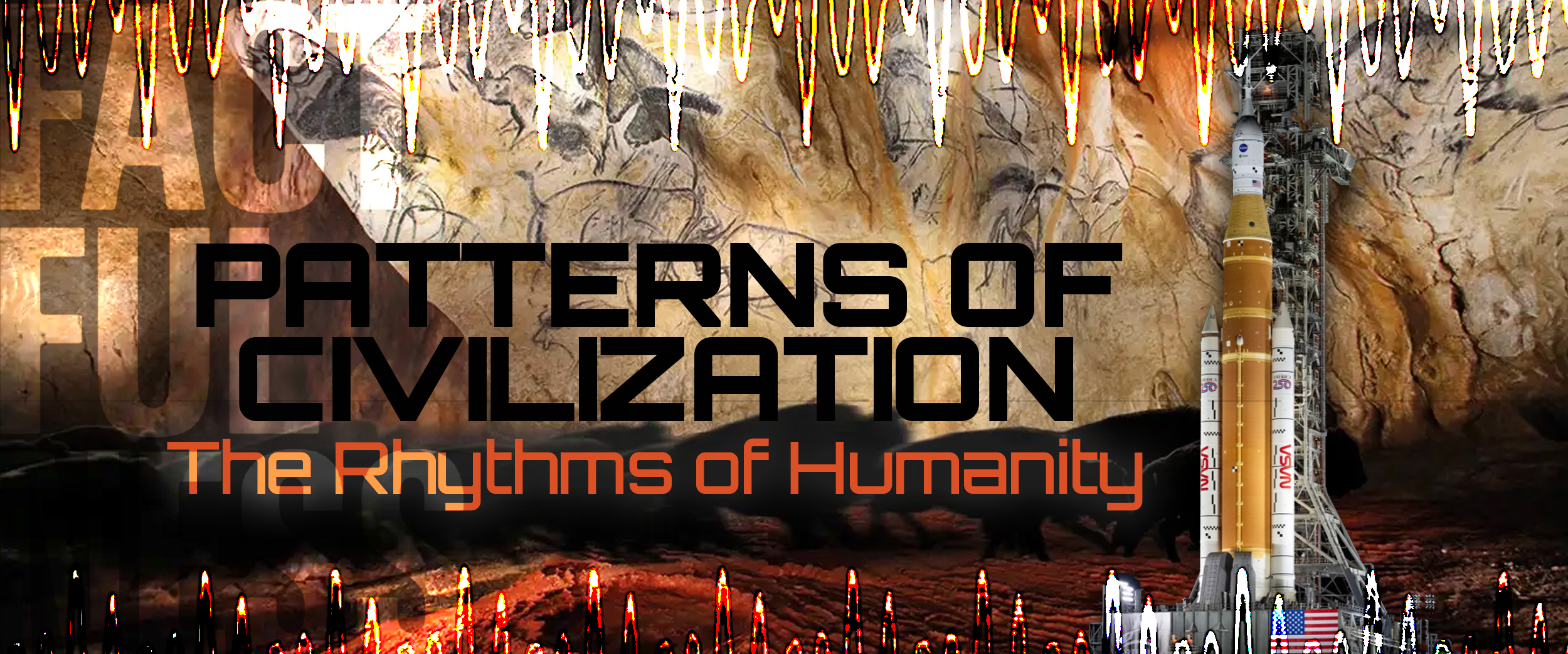
“History doesn’t repeat itself, but it often rhymes.” – Will Durant
This course examines the recurring patterns that shape human civilizations across time. From early societies to the modern world, students will explore how cultures form, expand, adapt, and sometimes collapse. Rather than treating history as a series of isolated events, the course approaches it as a set of recognizable structures and systems that repeat in different forms.
Through a combination of historical narrative, data-driven analysis, and reflective writing, students will examine how patterns emerge in areas such as cultural development, technological advancement, economic systems, and collective human behavior. Readings will range from broad histories of human civilization to contemporary analyses of global trends, as well as speculative fiction that imagines the future trajectory of society.
Students will be asked to identify, analyze, and question the patterns that define civilizations across time, drawing connections between past and present while considering how current trends may shape the future.
Isaac Asimov, Foundation; Will Durant, Lessons of History; Michael Easter, The Comfort Crisis; EH Gombrich, A Little History of the World; John Green, The Anthropocene Reviewed: Essays on a Human-Centered Planet; Neil Howe, The Fourth Turning Is Here; Hans Rosling, Factfulness: Ten Reasons We’re Wrong about the World—and Why Things Are Better Than You Think; Emily St. John Mandel, Station Eleven
H007 MW 9:30 - 10:45
A Tiger in the Grass
Professor Don Yee
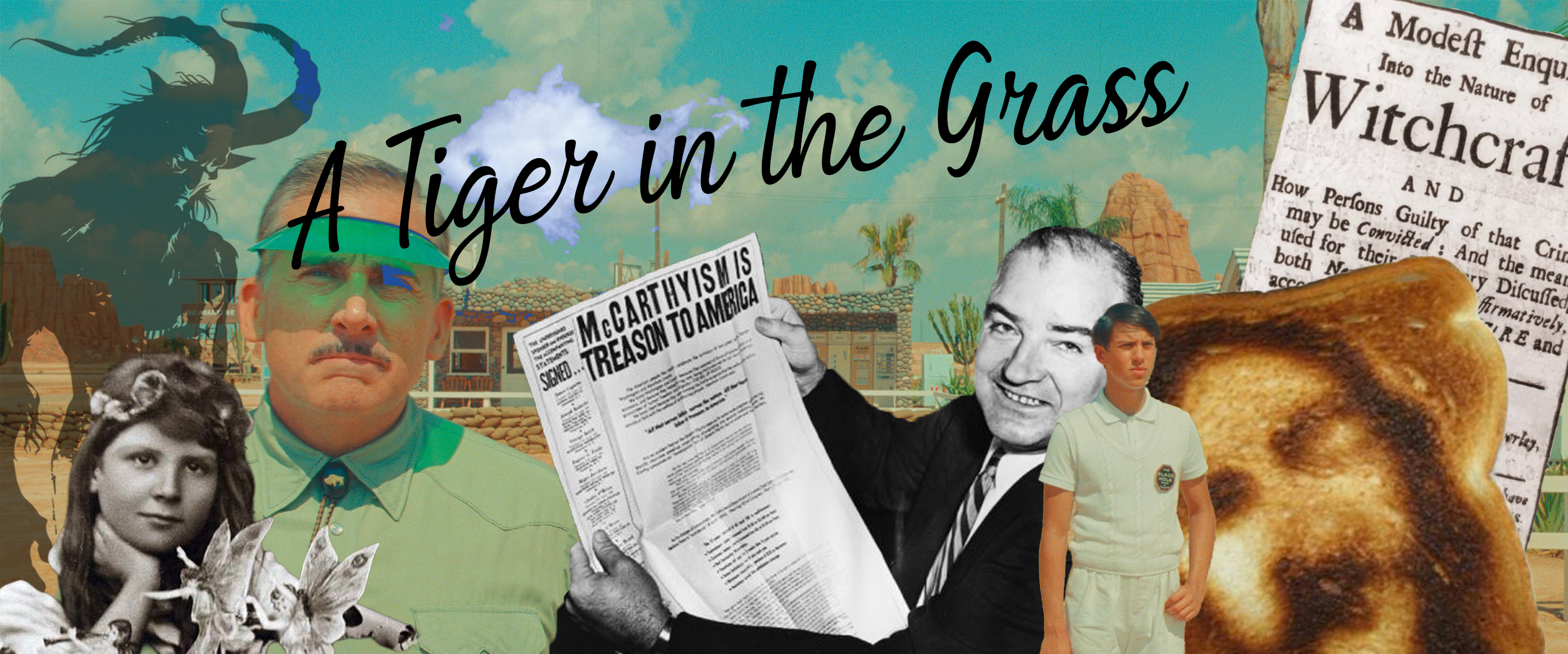
The Alien: “I don’t play him as an alien, actually. I play him as a metaphor. That’s my interpretation.”
Augie: “Metaphor for what?”
The Alien: ‘I don’t know yet. We don’t pin it down.”
—Asteroid City (2023)
Humans are pattern seekers. The culmination of countless biological processes and events has led us to imagine unique and meaningful configurations of the world around us. We “see” faces in everyday objects, perceive shapes of animals in clouds, and see ancient buildings on Mars. We also recognize patterns in our choices and actions, such as when we wear our lucky socks thinking that they influence the outcome of the game.
This innate desire to make sense of the shapes and events in our lives often brings meaning to an otherwise chaotic and unpredictable world. However, the same desire to find patterns comes at a cost, as we are often wrong and find that there is less meaning in the patterns we saw than we initially attributed to what we saw as a pattern, or we take action to address problems that don’t exist. Of course, as humans, we also sometimes miss patterns that desperately need to be addressed.
This section of Colloquium will build off the idea of the tiger in the grass; seeing one when there is none versus missing the one that exists. In HON 111 we’ll explore situations where our need to find patterns led us astray and resulted in harm to others. In HON 112 we’ll investigate individuals and situations that suggested a real tiger in the grass and the ramifications that come when society resists accepting the tiger’s presence. Through a blend of reading and formal discussion, in class projects, and a healthy dose of film viewing, students will begin to answer the questions that surround the how and why of the patterns we see and those that we miss.
Potential Readings: Emerson W. Baker, A Storm of Witchcraft: The Salem Trials and the American Experience, F. R. Maher, Sir Arthur Conan Doyle & The Secret of the Cottingley Fairies, Kier-La Janisse, Satanic Panic: Pop-Cultural Paranoia in the 1980s; Larry Tye, Demagogue. The Life and Long Shadow of Senator Joe McCarthy
H008 TTH 11:00 - 12:15
Repetition and Rupture: Signs in the Noise
Professor Iliyan Iliev
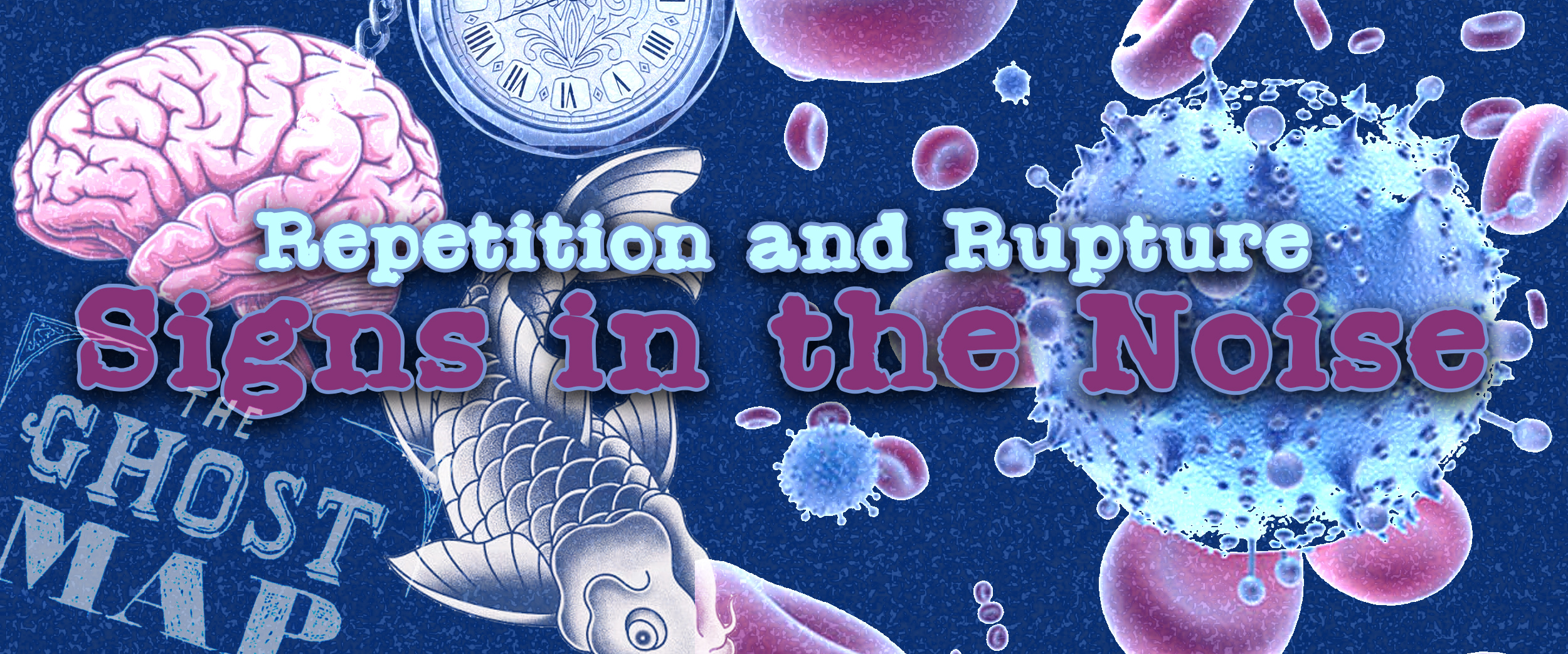
Humans are driven to search for order amid uncertainty, captivated by patterns, imagined or real. We make sense of a complex world through stories, science, history, and art. We create, interpret, and disrupt the rhythms of nature, we observe the structure of time, and recognize patterns inside us. In this course, we will consider the search for order in the natural world, the nature of time itself, the divided architecture of the brain, the spread of ideas and diseases through networks, the psychology of judgment and decision-making, and the stories societies imagine to connect past and present. Together, we will investigate whether patterns are features of reality waiting to be discovered, or if they are frameworks through which humans impose meaning on an uncertain world. By engaging with diverse perspectives and disciplines, students will develop new ways of seeing the signals, structures, and surprises that shape human experience. In a world overflowing with information, Repetition and Rupture challenges us to look beyond the obvious, question our assumptions, and discover what the noise might be trying to tell us.
In the Fall, we will begin exploring questions that we strive to answer, and we will learn the tools to get us to an answer. In the Spring, we will use these tools to find the signs in the noise to uncover the order we seek.
Potential Readings: Lulu Miller, Why Fish Don’t Exist: A Story of Loss, Love, and the Hidden Order of Life; Jason Lutes, Berlin; Iain McGilchrist, The Master and His Emissary: The Divided Brain and the Making of the Western World; Carlo Rovelli, The Order of Time; Tom Chivers, Everything Is Predictable: How Bayesian Statistics Explain Our World; Elif Shafak, There Are Rivers in the Sky; Steven Johnson, The Ghost Map
Archives
- 2025-26: Exploration
- 2024-25: Sense
- 2023-24: Connection
- 2022-33: Resistance
- 2021-22: (Un)Certainty
- 2020-21: Boundaries
- 2019-20: Progress
- 2018-19: The (Un)Known
- 2017-18: Journeys